START WITH THE LAND.
Papaya cultivation on the Khadadevi farm gives the product range a source close to home.
 TMG•AGRO↗
01 / OUR STORY / KHADADEVI, RAMECHHAP
T.M.G Agro Farm grows papaya on 120 ropani in Khadadevi and works to turn fresh fruit into juice, candy and soap close to where it is picked.
FOLLOW THE JOURNEY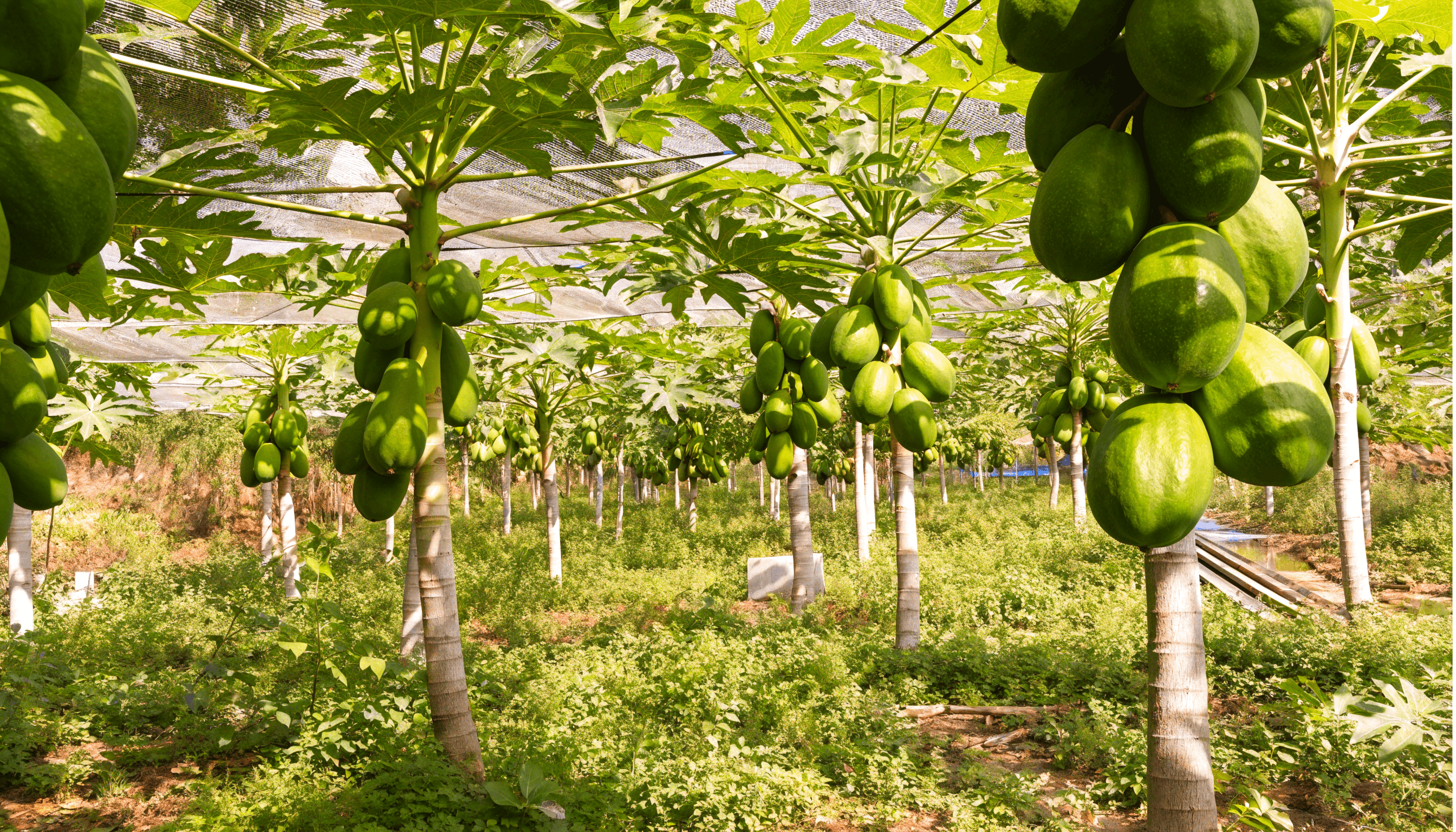 TMG AGRO / GOOD GROWS HERE
Papaya grows well across Ramechhap's hills, but a strong harvest can overwhelm the fresh-fruit market. When prices fall and unsold fruit spoils, growers lose value that could stay in their community.
Founder Janak Lal Tamang established T.M.G Agro Farm in Khadadevi-8 to connect cultivation with a local processing path and give fruit another destination.
Papaya cultivation on the Khadadevi farm gives the product range a source close to home.
Fruit is brought into production for juice, candy and soap rather than relying only on the fresh-fruit market.
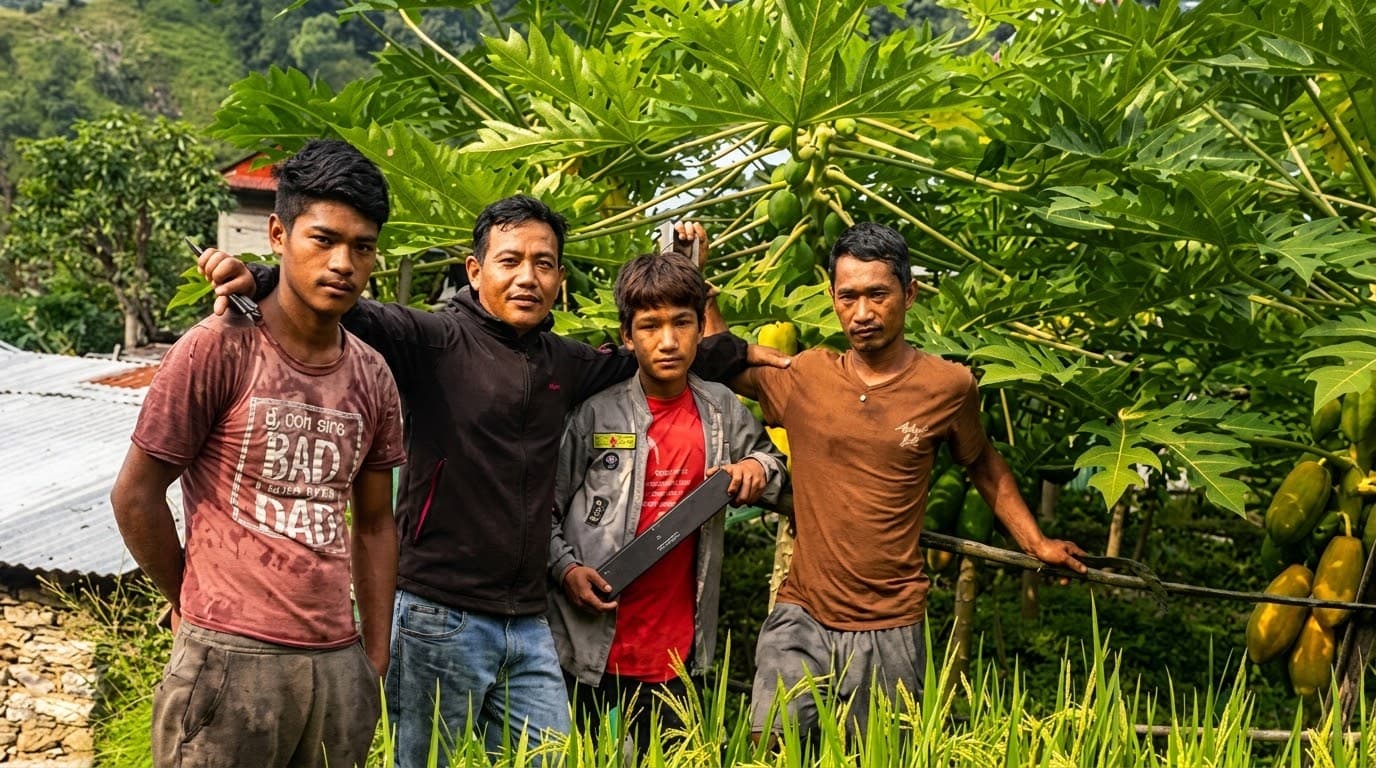
Farming, processing and packaging are intended to create opportunities for people in Khadadevi and the wider Ramechhap area.
03 / THE REASON BEHIND THE BOTTLE
Processing papaya close to its source can reduce waste, create products with a longer route to market and keep more of the work around the farm.
04 / FOUNDER AND TEAM
Mr. Janak Lal Tamang founded T.M.G Agro Farm to make Nepal's papaya harvest count for more, from the field to the finished product. The farm is based in Khadadevi Rural Municipality-8, Ramechhap.
Its ambition extends beyond products: build livelihoods through cultivation, processing and packaging, and keep more opportunity close to home.
READ THE BRIDGE PROFILE ↗